How a Self-Inking Rubber Stamp Works and How Long It Lasts
A self-inking rubber stamp is the most common stamp type in Singapore offices, and most people buy one without ever knowing how it works or how long it should last before it needs attention.
That matters when you are choosing. The difference between a self-inking stamp and a traditional one is not only convenience. It changes how the stamp is used day to day, how long it takes to make, and what happens when the ink runs low.

How a self-inking rubber stamp works
The ink pad sits inside the stamp body rather than in a separate tin.
Press down and the rubber die rotates as it travels, pressing onto the paper. Release, and the die swings back up against the internal pad, re-inking itself ready for the next impression. That single motion does the inking and the stamping together, which is why a self-inking stamp can be used one-handed and at speed.
A traditional rubber stamp has no internal pad. The die is fixed and uninked, so every impression needs you to press the stamp onto a separate pad first, then onto the paper. Two actions instead of one, and a tin of ink that has to travel with the stamp.
Self-inking or traditional rubber stamp
Self-inking suits anyone stamping regularly. Invoices, delivery orders, approvals, marking, anything repeated through a day. It is also the only sensible choice if the stamp leaves your desk, because there is no separate pad to carry or spill.
Traditional rubber stamps are worth considering in two situations. If the stamp will be used occasionally rather than daily, the internal pad is a feature you are paying for and not using. And if you need a very large impression, traditional stamps go up to around 99mm by 157mm, which is considerably larger than the self-inking range.
Both options sit side by side in the self-inking stamp range and the traditional rubber stamp range.
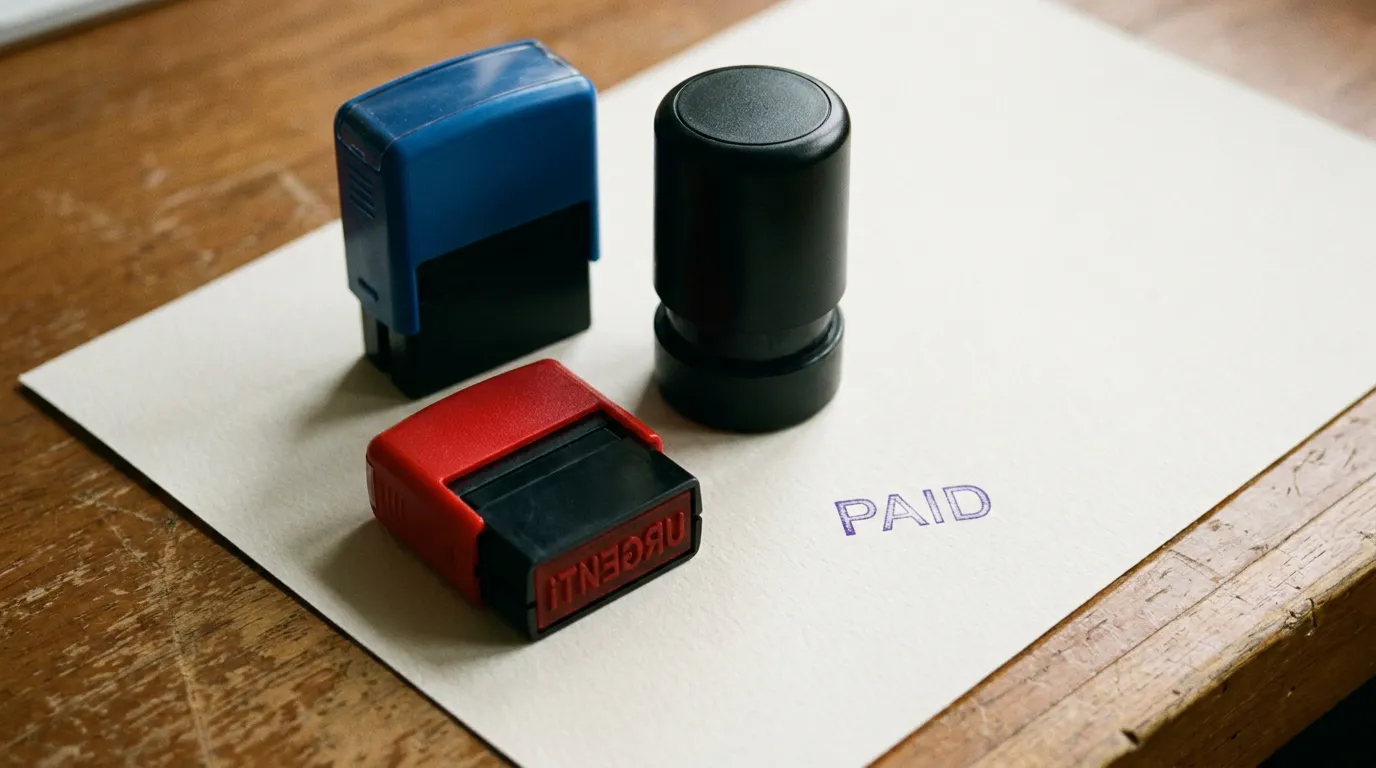
How long a self-inking stamp lasts
Two separate numbers matter here, and people tend to confuse them.
Impressions before refilling. A self-inking stamp typically gives up to 1,000 crisp impressions on one ink load. Stamping twenty documents a day, that is roughly a working quarter before the impression starts to look faint.
Lifespan of the stamp itself. With proper care, the stamp lasts up to six years. The rubber die is the part that eventually wears, not the mechanism.
When impressions start looking patchy, the stamp is not finished. It needs refilling, and refilling is considerably cheaper than replacing. That is the reason a self-inking stamp works out economical over its life despite the higher purchase price.
Two habits extend that life. Store the stamp with the die retracted, which is its resting position, so the die stays in contact with the pad rather than drying out. And refill before the impression fades badly rather than after, because a dry pad takes longer to recover.
The ink is waterproof, which matters for documents that get handled, filed or exposed to damp.
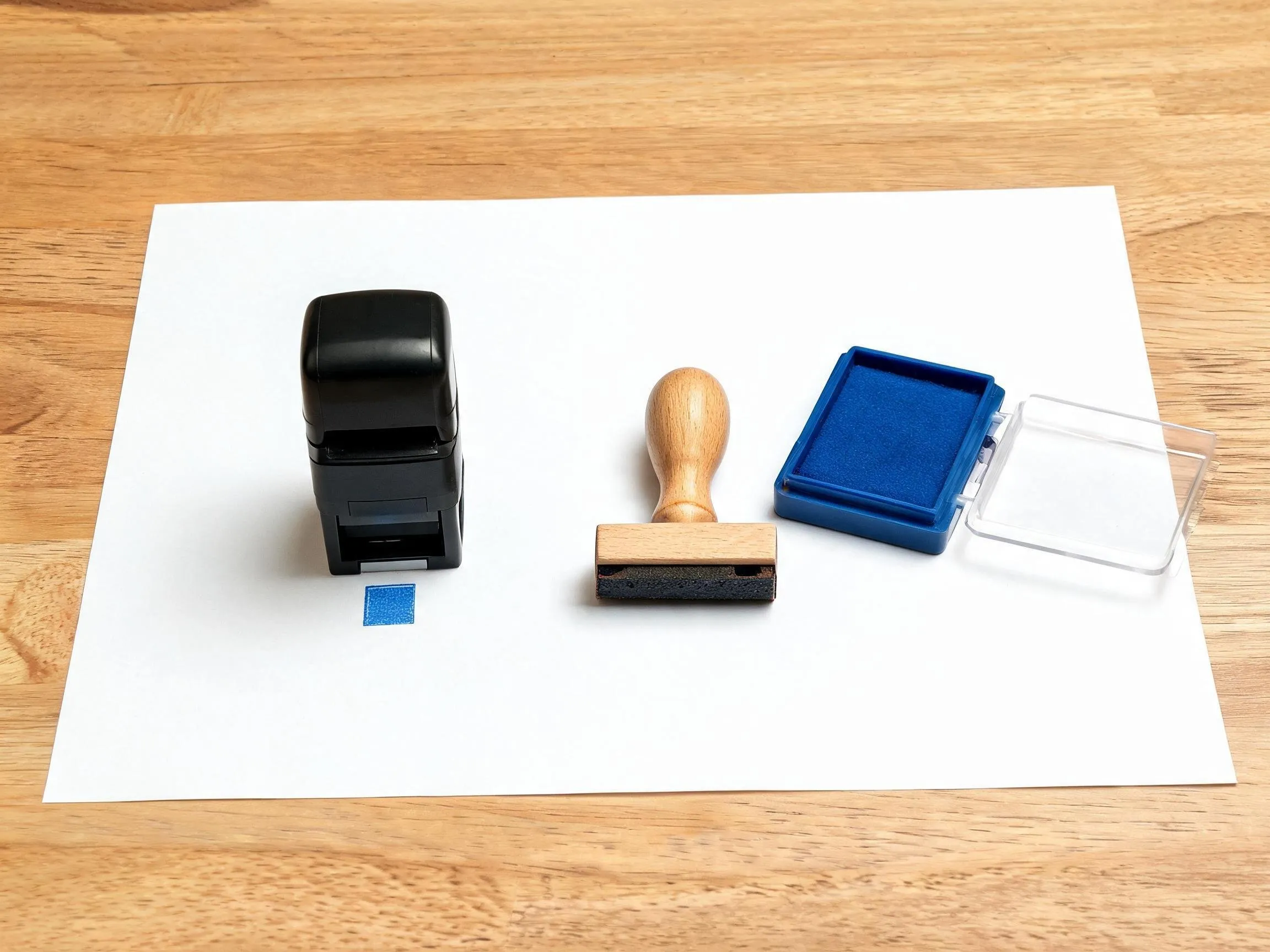
Sizes and shapes
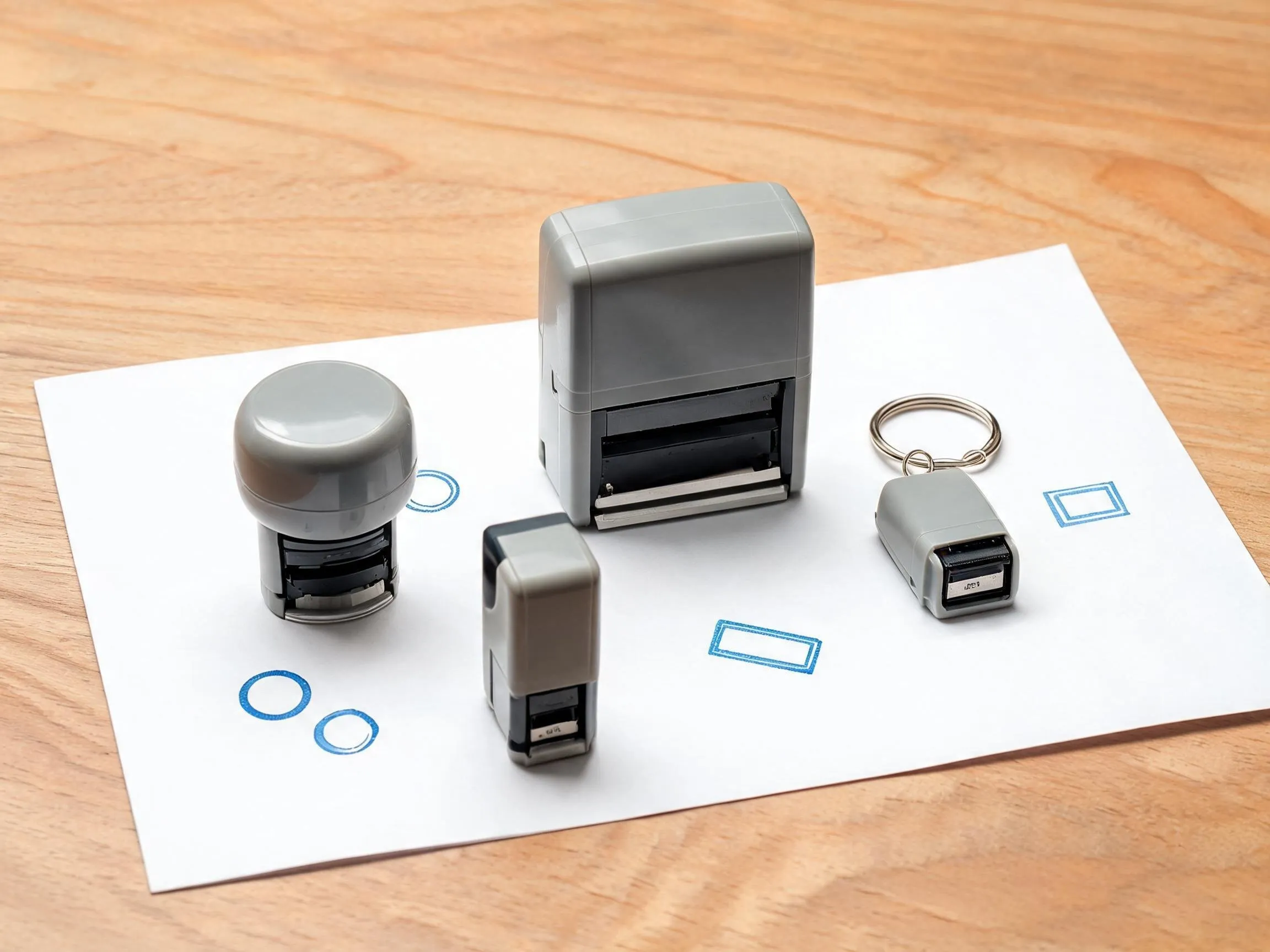
The self-inking rubber stamp range covers four formats.
Round. From 10mm to 50mm diameter. The conventional company chop shape in Singapore, and the usual choice for a company name with a UEN or a logo.
Rectangle. From 9mm to 85mm high and 36mm to 125mm wide. The right format for anything with several lines, such as an address block, a signature line or bank account details.
Pocket. A compact format built to be carried, for anyone stamping away from a fixed desk.
Keychain. The smallest format, with an artwork area of about 6mm by 24mm, taking one or two lines. Popular as a personal name stamp.
If you are unsure which fits, count your lines of text first, then pick the format. Text that is technically inside the artwork area but set too small to read has not solved anything.
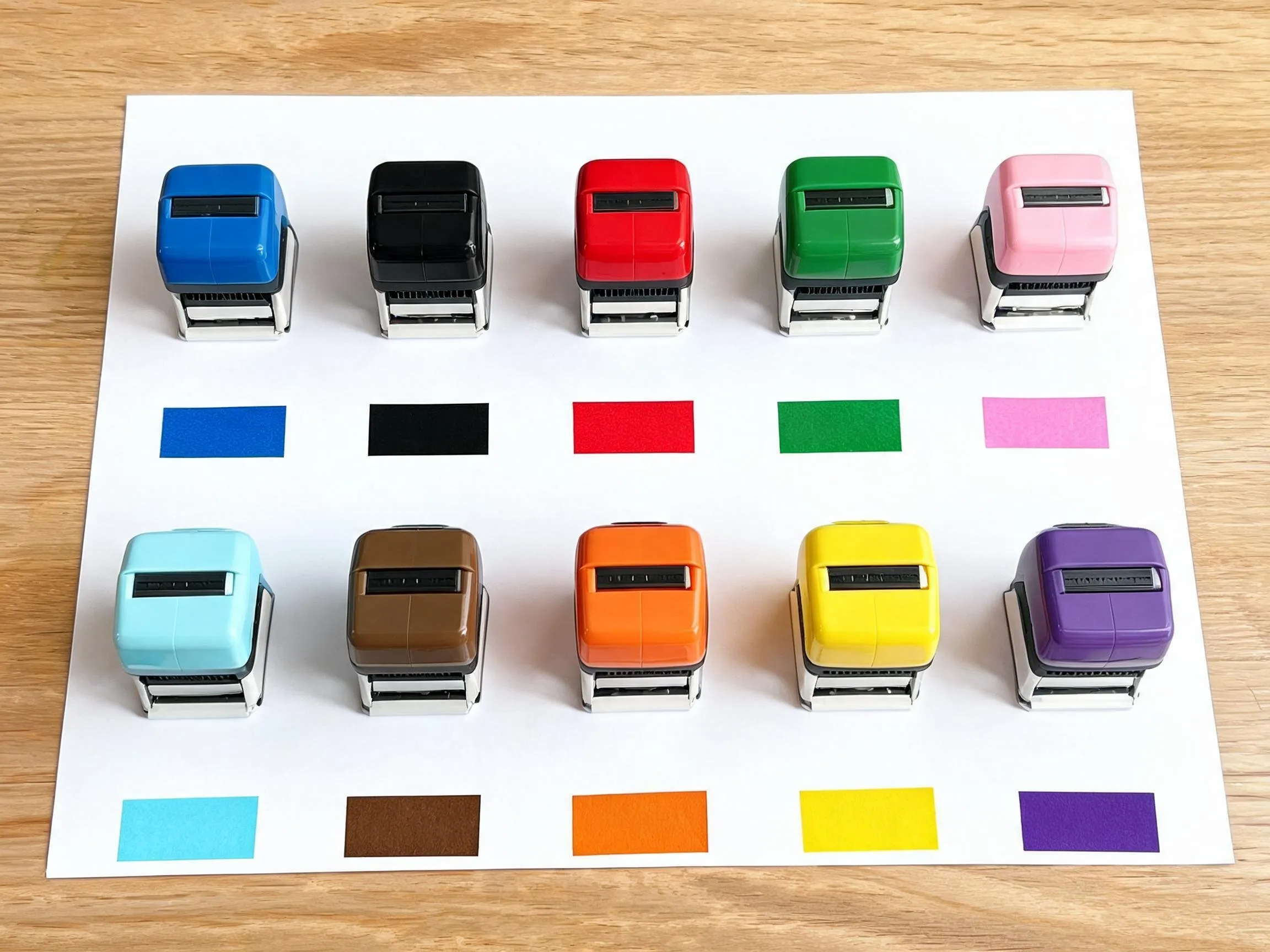
Ink colours
Ten ink colours are commonly available: blue, black, red, green, pink, sky blue, brown, orange, yellow and purple.
Black and blue are the standard choices for business documents, particularly anything that will be photocopied, scanned or filed. Red is conventionally reserved for corrections, approvals and anything that needs to stand out from the body text.
Choose the colour at the point of order. The internal pad is supplied inked in your chosen colour, so it is not a decision to leave until later.
Which format suits you comes down to the text rather than the product. Count your lines, then see the shapes and sizes available in the self-inking stamp range.