How a Wax Seal Stamp Works and When You Would Use One
A wax seal stamp is one of the few pieces of office equipment that has barely changed in four hundred years, and it still gets ordered every week in Singapore. Wedding invitations, legal documents, certificates and corporate correspondence that needs to feel considered rather than printed.
If you have landed here trying to work out whether you need a wax seal stamp or a common seal, they are not the same tool and they do not produce the same result.
How a wax seal stamp works
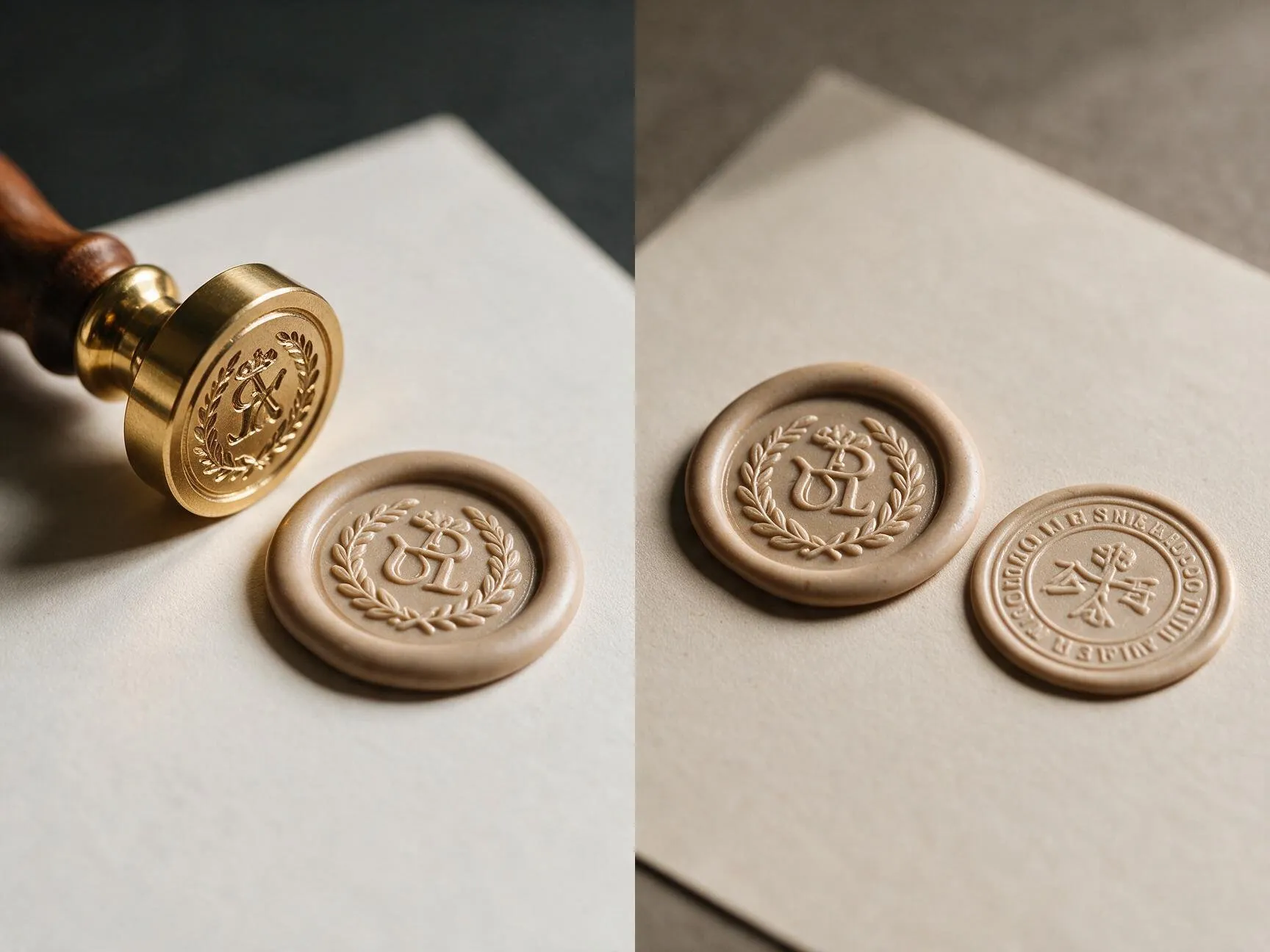
A wax seal stamp is a metal die, usually brass, with your design cut into its face and mounted on a handle. It does not print anything on its own. The design only appears when you press it into a pool of melted sealing wax.
The sequence is simple. Melt the wax, pour a small pool onto the paper or envelope flap, wait a few seconds, then press the die straight down into it. As the wax cools around the engraved face it takes the shape of your design and hardens into a raised, coloured emblem sitting on the surface.
Two things follow from that. The seal is physically raised, so it is felt as much as seen. And once set, it cannot be lifted and reapplied without breaking, which is why wax seals were originally used to prove a letter had not been opened, and why they still carry that association.
Wax seal, common seal or rubber stamp
This is the most common mix-up, and it matters because ordering the wrong one means ordering again.
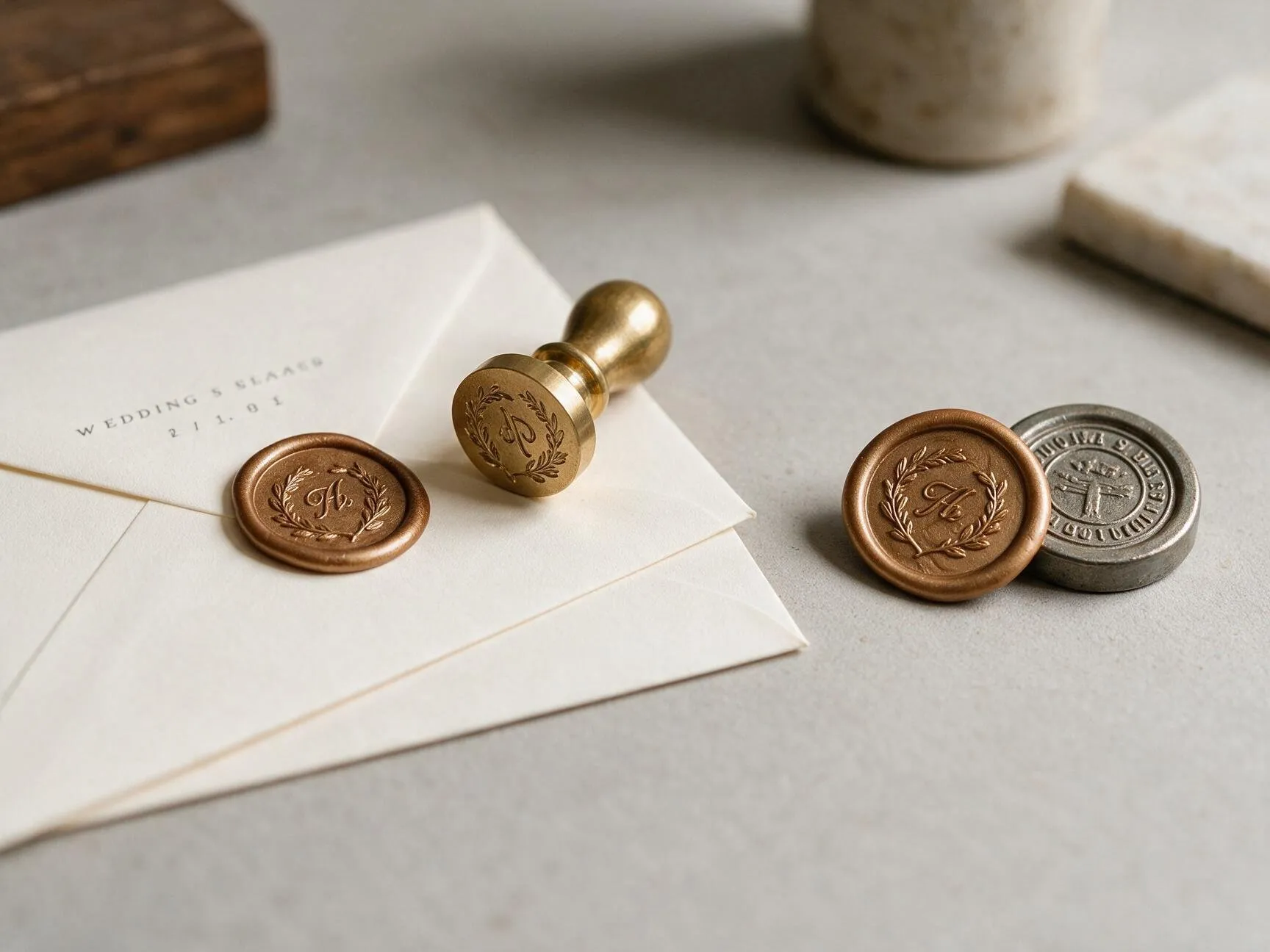
A common seal, also called a company seal or metal seal, is an embosser. Two dies close on the paper and deform it, leaving a colourless raised impression you read by tilting it to the light. No wax, no ink. It is a formal corporate instrument, and in Singapore it is what gets used on share certificates and company registers. If that is what you need, a common seal is the different tool for that job.
A rubber stamp prints ink and leaves a flat mark. It is the workhorse for invoices, delivery orders and anything where speed matters more than ceremony.
A wax seal stamp is the only one of the three that produces something raised, coloured and tamper-evident. It is chosen for effect and formality, not for volume.
Where wax seals are used
Wax seals show up in a narrower set of places than people expect, and the reason differs in each.
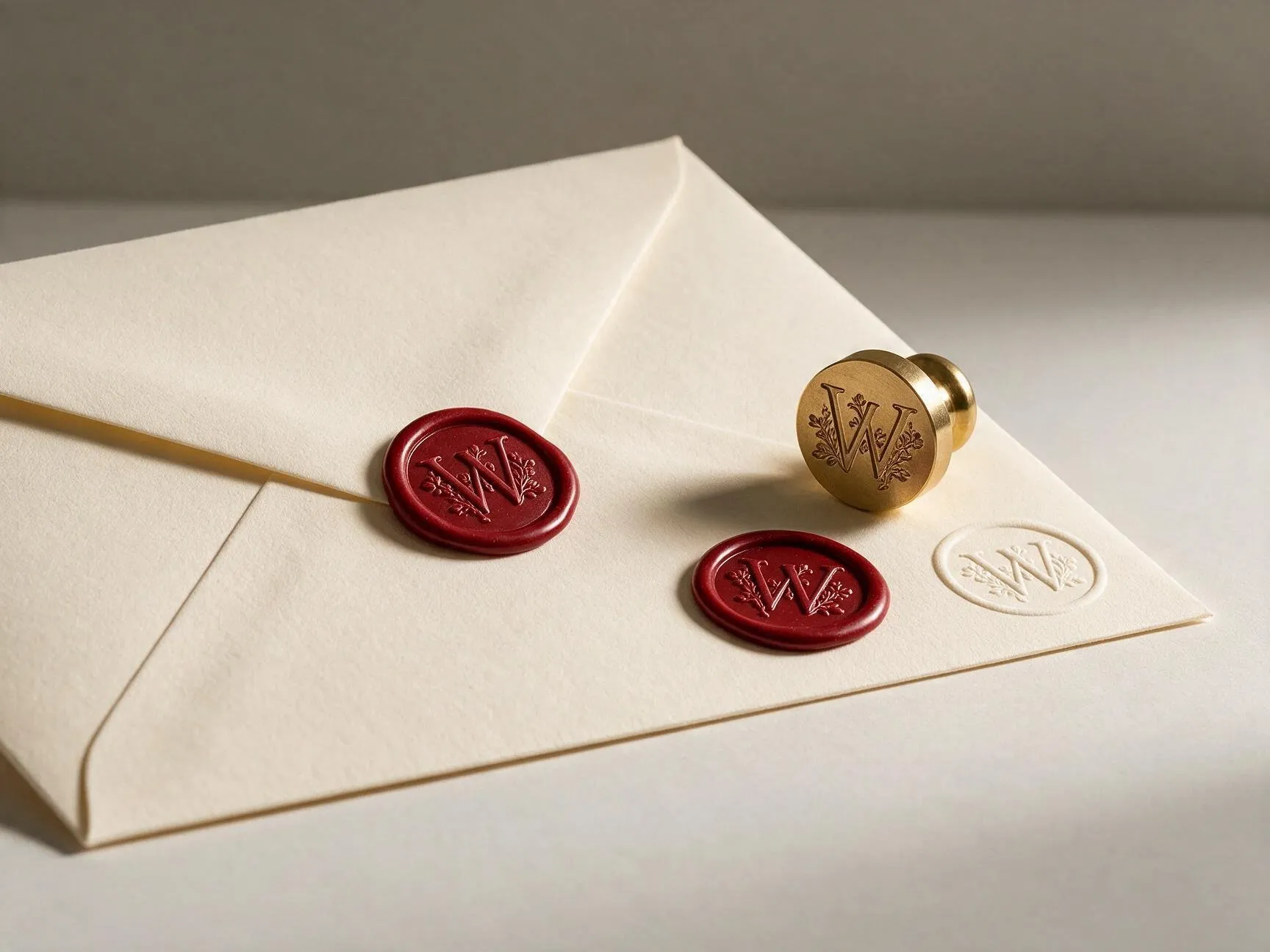
Wedding and event invitations. The most common use by far. A wax seal on the envelope flap signals that the invitation is worth opening properly, and it holds a folded suite closed without adhesive.
Legal and confidential documents. A broken seal is visible evidence that an envelope has been opened. For documents passing through several hands, that is a security function rather than decoration.
Corporate documents and certificates. Awards, membership certificates and formal letters where a printed logo would look flat and a raised seal looks deliberate.
Envelopes and letters generally. Anything where the physical object is part of the message.
Designing one that reproduces well
The die face is small, and wax picks up far less fine detail than paper does. That constrains the design more than most people expect.
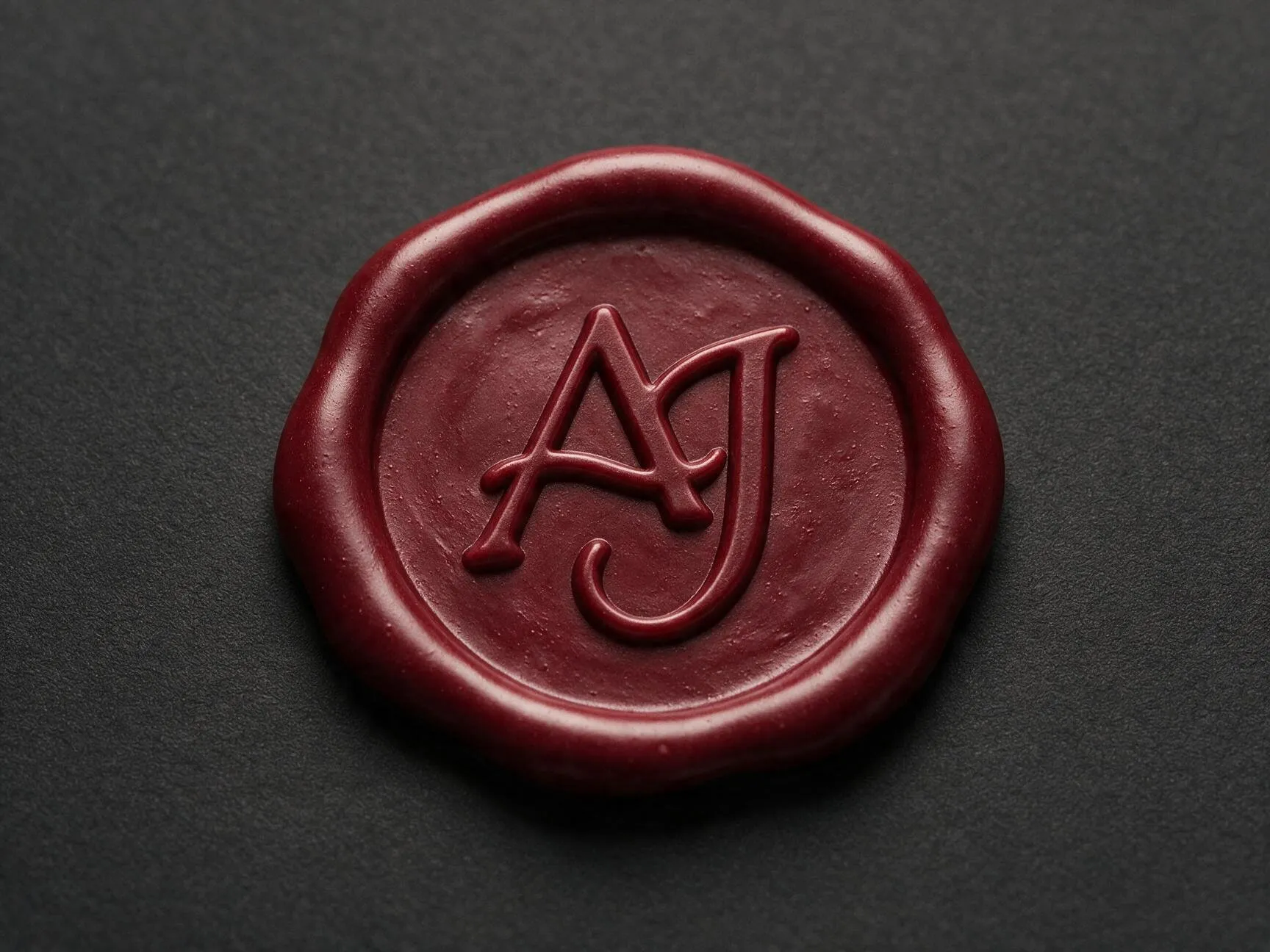
What works: a monogram of one to three letters, a simple logo reduced to its silhouette, a crest, a single symbol, a short name. Bold shapes with clear space between them.
What does not: fine hairlines, small text, gradients, or anything with detail that would disappear if printed at the size of a coin. If a line is thinner than the gap beside it, it will fill with wax and vanish.
A useful test. Shrink your design to about 25mm on screen and look at it. If you cannot read it there, wax will not save it.
If you are unsure whether a logo will survive being cut into a die, ask before committing. Most suppliers will tell you honestly, because a design that reproduces badly is a complaint waiting to happen.
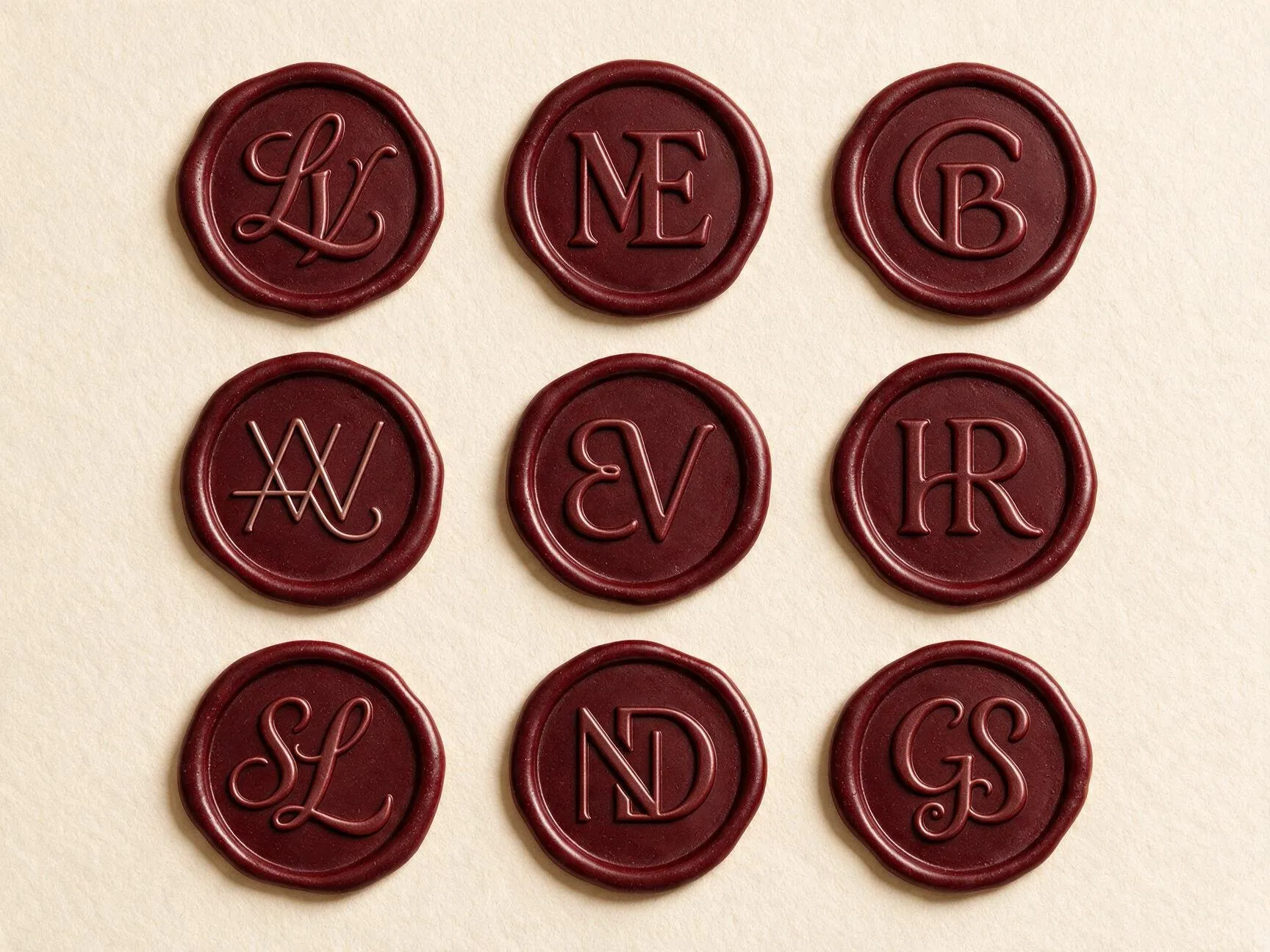
Pressing a clean impression
Most disappointing wax seals come from technique, not from the stamp.
Pour enough wax. The pool should be slightly wider than the die face. Too little and the design runs off the edge.
Let it cool for a few seconds. Pressing into wax that is still glassy and molten produces a thin, spreading blob. Wait until the surface loses its shine.
Press straight down and hold. Do not twist or rock the die. Hold for several seconds.
Wait before lifting. Lift too early and the wax stretches. Let it set.
If the die sticks, chill it briefly between impressions, or wipe the face with the barest trace of oil.
Running a few practice impressions on scrap paper before starting on fifty invitations is worth the ten minutes.
Wax seals are made to your own design, so the die is cut once and used for years. You can see the options on the custom wax seal page, or compare it against a common seal if you are still deciding which of the two you actually need.