How Much Text Fits on a Name Stamp and Who Uses Them
A name stamp does one small thing repeatedly. It puts your name on something, legibly, without you writing it. For anyone signing off dozens of documents a shift, or labelling a term's worth of exercise books, that adds up quickly.
The question almost everyone gets wrong first time is how much text will actually fit. A keychain name stamp is genuinely small, and the difference between one you use daily and one you regret comes down to deciding what goes on it before you order.
What a name stamp is
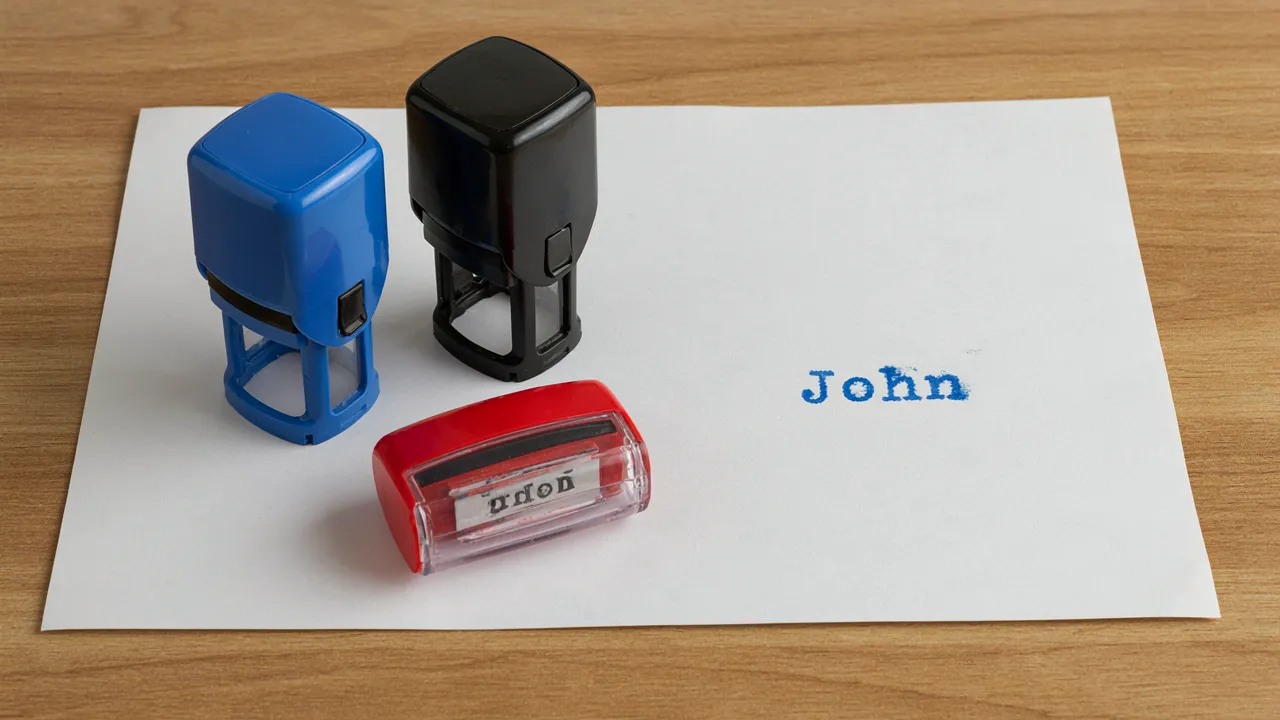
A name stamp is a self-inking rubber stamp carrying your name, and usually one supporting line. A designation, a registration number, a class, or a department.
Self-inking means the ink pad sits inside the body. Press down and the stamp re-inks itself for the next use. There is no separate pad to carry, open or spill, which is the whole reason the format suits people working away from a desk.
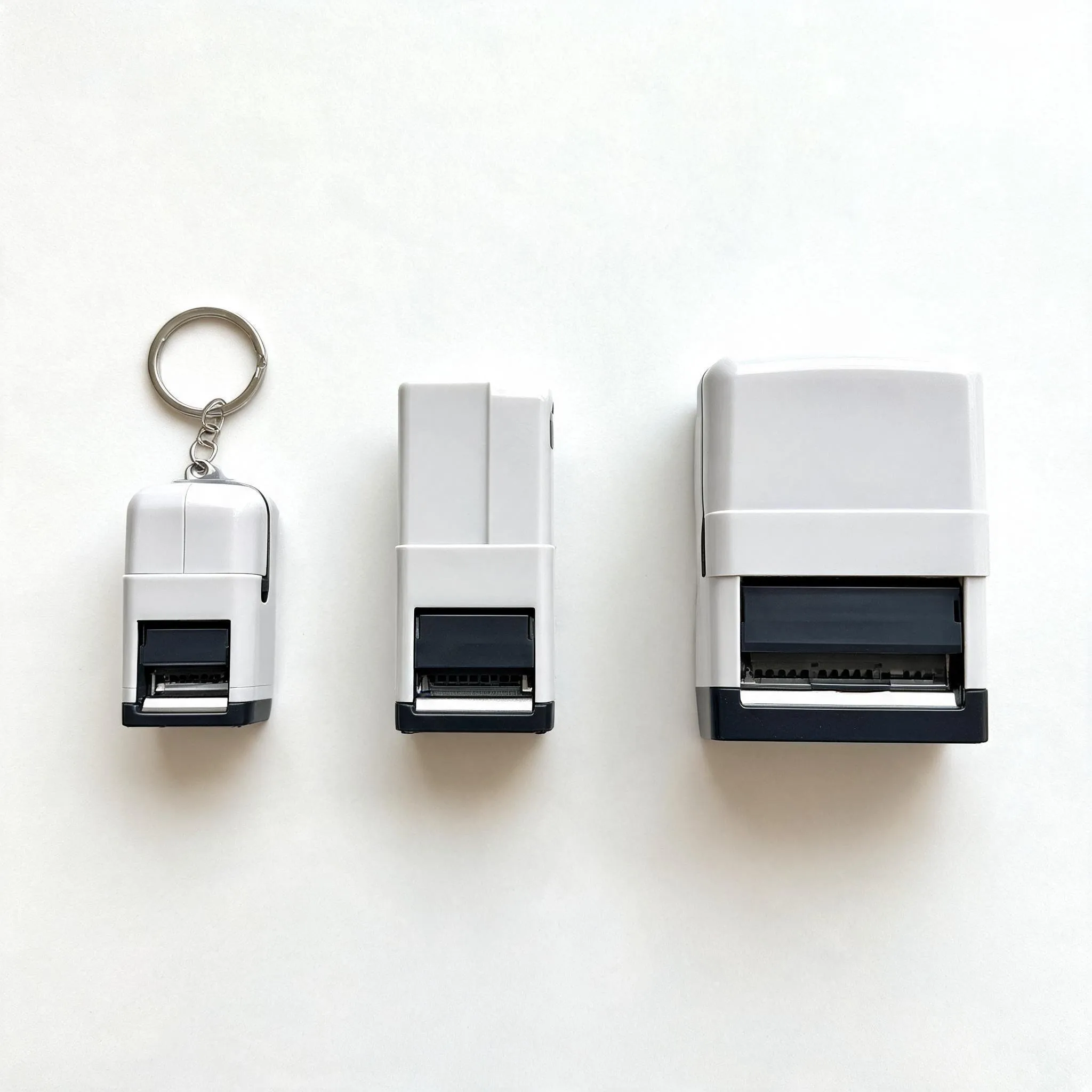
The keychain version is built to travel. It clips to a lanyard, a bag or a set of keys, so it is on you when you need it rather than in a drawer somewhere else.
Who actually uses name stamps
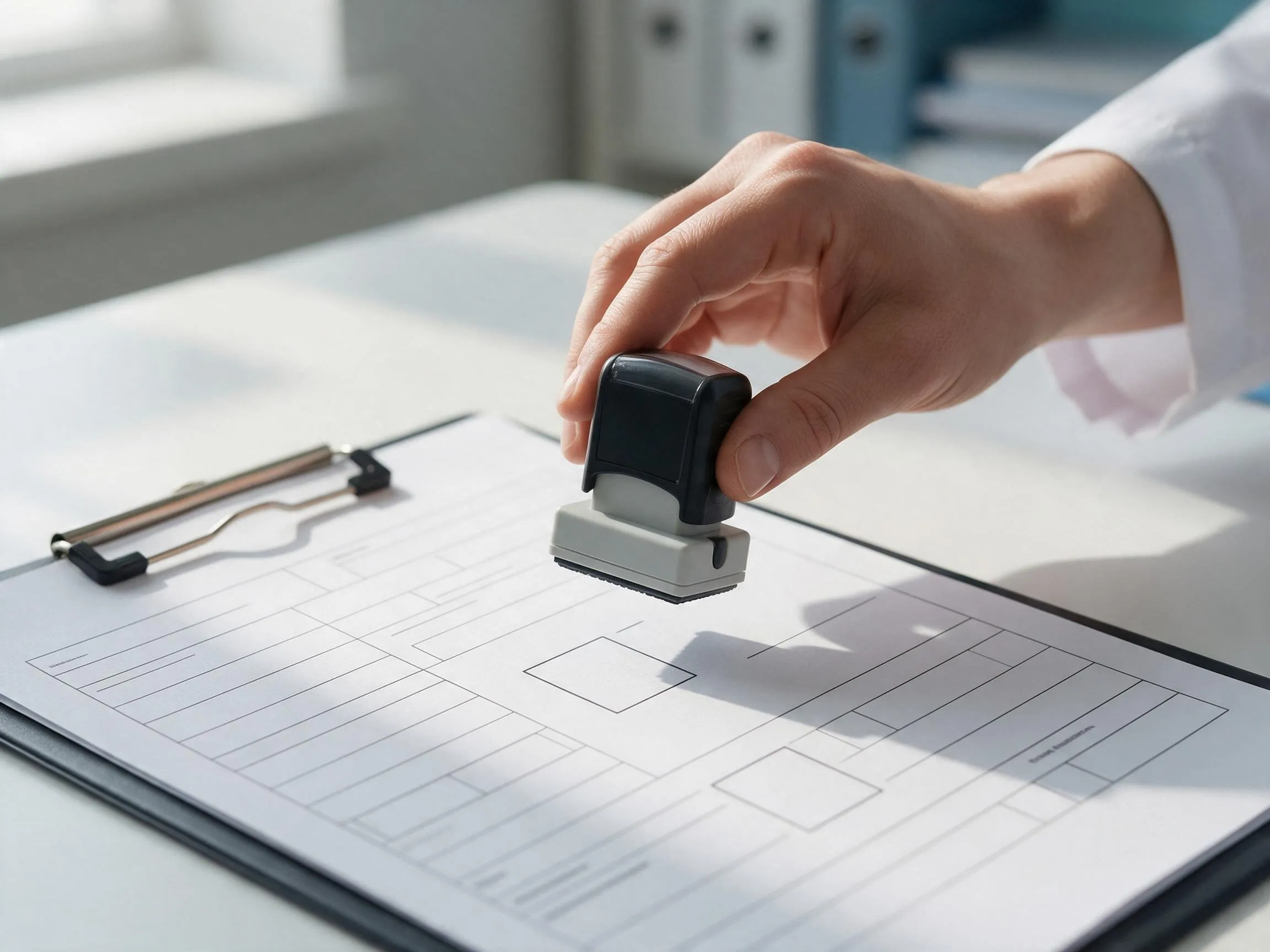
Nurses. The largest single group. Charting, medication records and handover notes all need a name against an entry, repeatedly, through a shift. Many want a name plus a registration or designation line. Handwriting the same name two hundred times is slower and, after hour ten, considerably less legible.
Teachers. For signing off marked work, recording that something has been seen, and adding a name to forms going home. Teachers often carry a name stamp alongside a separate teacher stamp for marking comments, because the two do different jobs.
Students and children. Labelling exercise books, files, worksheets and stationery. Faster than writing a name on thirty book covers at the start of term, and more consistent than a child's handwriting.
Uniformed services. SAF and SPF personnel completing forms and administrative paperwork that require a name against an entry. Same logic as nursing. High volume, needs to be legible.
Office and admin staff. Initialling documents, signing off receipts, marking items as checked or processed.
A name chop is the same object under the more local term, and the two are used interchangeably in Singapore.
How much text fits
This is the part worth reading carefully before ordering.
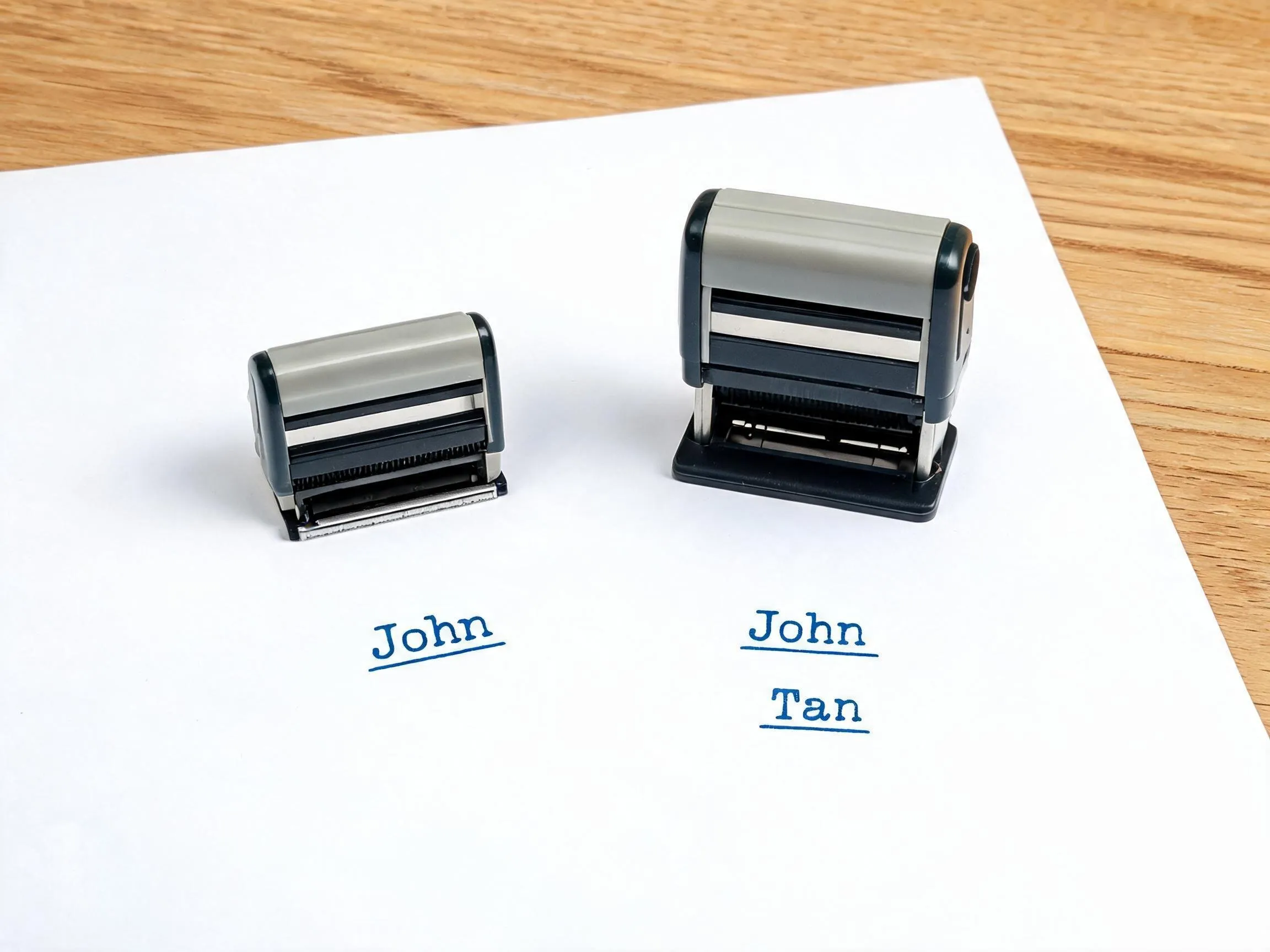
A keychain name stamp typically has an artwork area of roughly 6mm high by 24mm wide, and takes one or two lines. That is deliberately small, since it is what makes the stamp pocketable, but it constrains what you can put on it more than most people expect.
What that means in practice:
One line comfortably holds a name. Tan Mei Ling is fine.
Two lines hold a name plus one short supporting line. A registration number, a designation, a class, a department.
What does not fit: a full name, a long title, a registration number and a department all at once. Something has to go.
Three rules that save a reorder:
Decide what the stamp is for first. A stamp that identifies you needs your name. A stamp that also has to prove a qualification needs the registration line. Trying to do both plus a department is where it falls apart.
Shorten before you squeeze. Dr Tan Mei Ling reads better than cramming Dr Tan Mei Ling, Senior Consultant into the same space at half the size.
Legibility beats completeness. A stamp that is technically complete but unreadable on a photocopied form has failed at the only thing it was for.
If you need more than two short lines, such as a signature block, a full address, or several lines of detail, the keychain format is the wrong tool. A rectangle self-inking stamp gives considerably more room.
Choosing the format
Keychain. Portable, clips to a lanyard or bag, one or two lines. The default for nurses, students and anyone moving between wards, classrooms or sites.
Pocket. A step up in size, still designed to be carried. Suits people who need a larger impression but are still not at a fixed desk.
Rectangle. Desk-based, and the right choice when the stamp needs to carry several lines.
If you are unsure, start from the text rather than the format. Count your lines, then pick the size that fits them legibly.
Ink colour
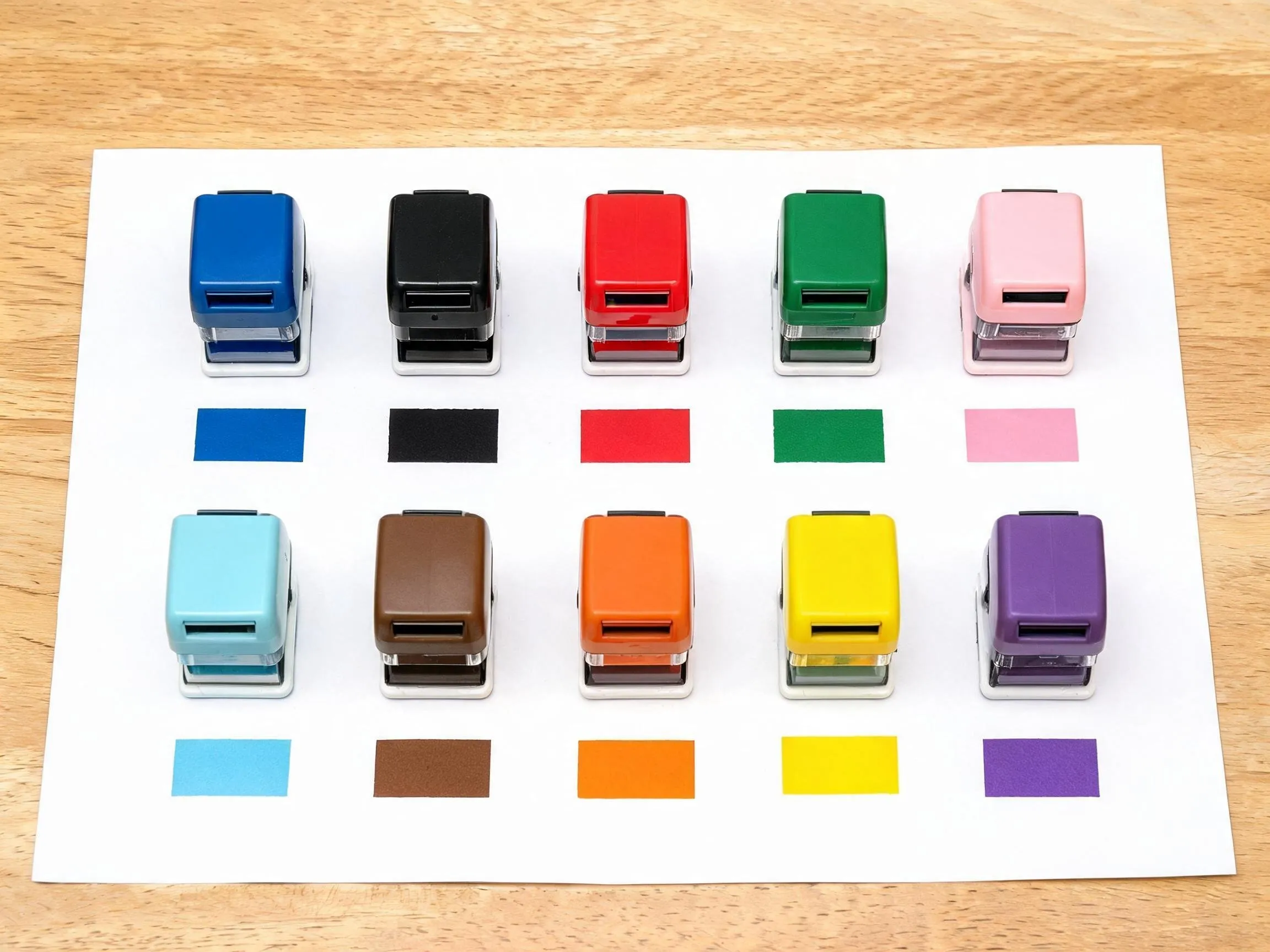
Ten ink colours are commonly available: blue, black, red, green, pink, sky blue, brown, orange, yellow and purple.
Black and blue are the practical choices for anything that gets photocopied, scanned or filed, which covers most clinical, school and administrative use. Colour matters more for children's stamps, where it is part of the appeal.
A personalised name stamp is made to your wording, so the only real decision is what it says. Keychain formats and sizes are on the name stamp page.