What to Put on Teacher Stamps and How To Use Them
A teacher marking two classes of worksheets will write the same handful of comments a few hundred times a term. Teacher stamps turn that repeated writing into a single press, consistent, legible, and fast enough to keep marking moving.
The hard part is not buying one. It is deciding what to put on it. A stamp with the wrong wording sits in a drawer. One with the right wording gets used every day for years.
What a teacher stamp is
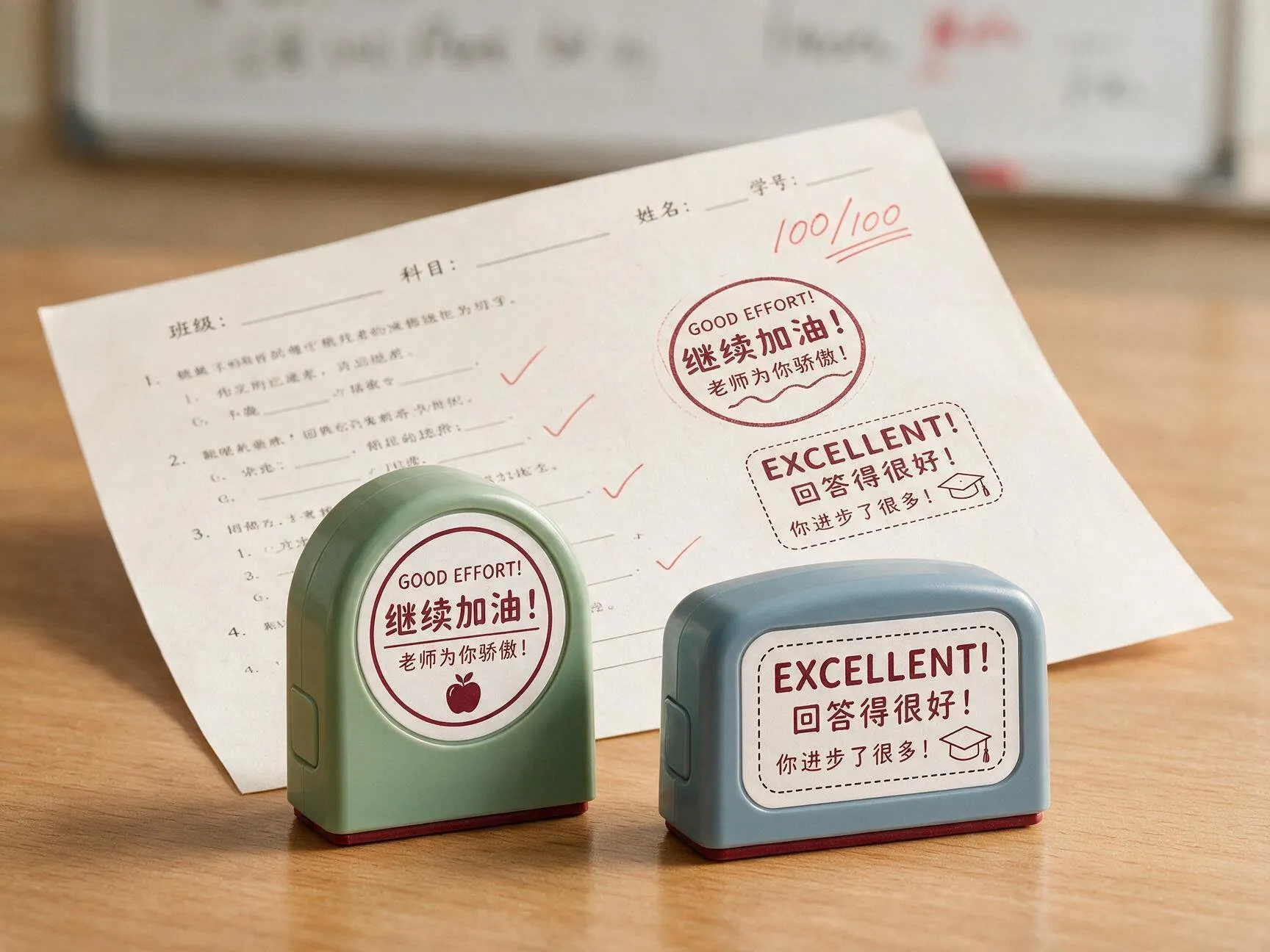
Most teacher stamps sold in Singapore are self-inking. The ink pad sits inside the stamp body, so you press down once and the stamp re-inks itself ready for the next use. There is no separate pad to open, no ink on your fingers, and nothing to knock over on a desk already covered in paper.
That matters more than it sounds. A traditional rubber stamp needs a separate ink pad, which is fine at a fixed desk but awkward when you are marking at home, in a staffroom, or moving between classrooms.
The stamp is made to your wording rather than chosen from a fixed catalogue of phrases, so the decision about what it says is entirely yours.
The three jobs a teacher stamp does
Most teachers end up wanting more than one, because the stamps do quite different jobs.
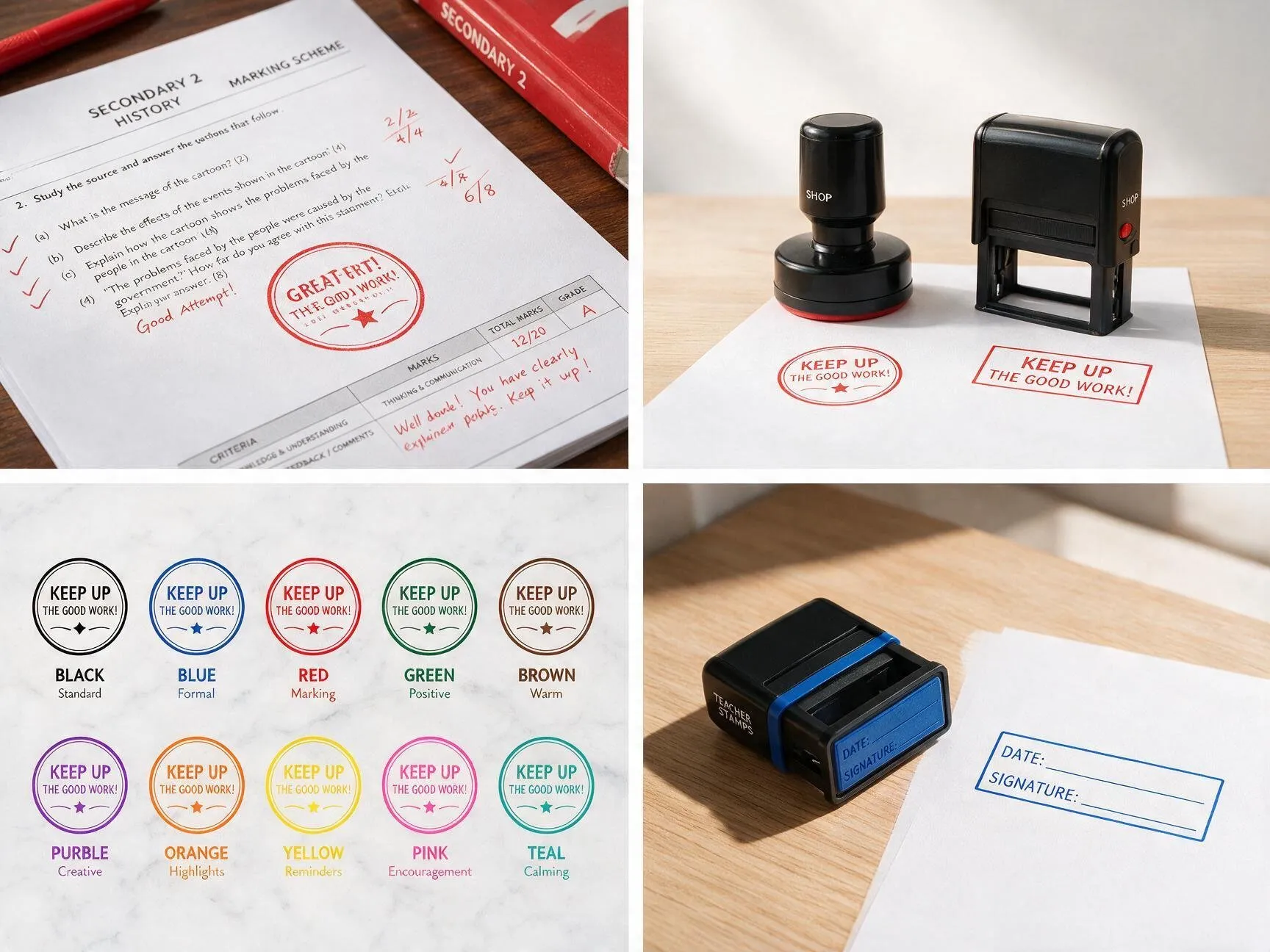
Feedback and marking. A short comment you write constantly, the kind of phrase that is genuinely useful to a student but tedious to write out fifty times.
Administration. The unglamorous ones that save the most time. Date received, seen by, parent's signature required, late submission. These create a consistent record across a whole class set.
Encouragement. Short affirmations with or without a small image. These matter most in primary classrooms, where a stamp is a small reward in itself.
If you are buying your first one, buy for the job you repeat most often. That is almost always feedback, not encouragement.
Wording that works
Keep it short. A stamp holds far less text than people expect, and cramming words in makes the impression harder to read on lined paper.
Wording teachers commonly use:
Marking: Well done, Good effort, Check your work, Please correct and resubmit, Show your working, Excellent presentation
Administration: Received, Date received: ____, Seen by: ____, Parent's signature: ____, Late submission, Incomplete
Encouragement: Great improvement, Keep it up, I'm proud of this, Outstanding work
Three practical rules:
One idea per stamp. A stamp reading Well done, but check your spelling does two jobs badly. Two stamps do both well.
Leave a blank line if you need to write on it. Underscores for a date or a signature are far more useful than a stamp that only prints a fixed phrase.
Add your name if the stamp leaves the room. Seen by Mrs Tan is more useful on work going home than Seen by.
You can also include a small image alongside the text, such as a tick, a star or a simple character. Images read well at small sizes as long as they are simple shapes rather than fine detail.
Round or rectangle
Round stamps suit short phrases and images. They look like a badge, which works well for encouragement stamps in primary classrooms.
Rectangle stamps suit longer wording and anything with a blank line to write on. If your stamp includes a date field, a signature line, or more than three or four words, rectangle is usually the better fit.
Both formats are available across the teacher stamp range in a variety of sizes.
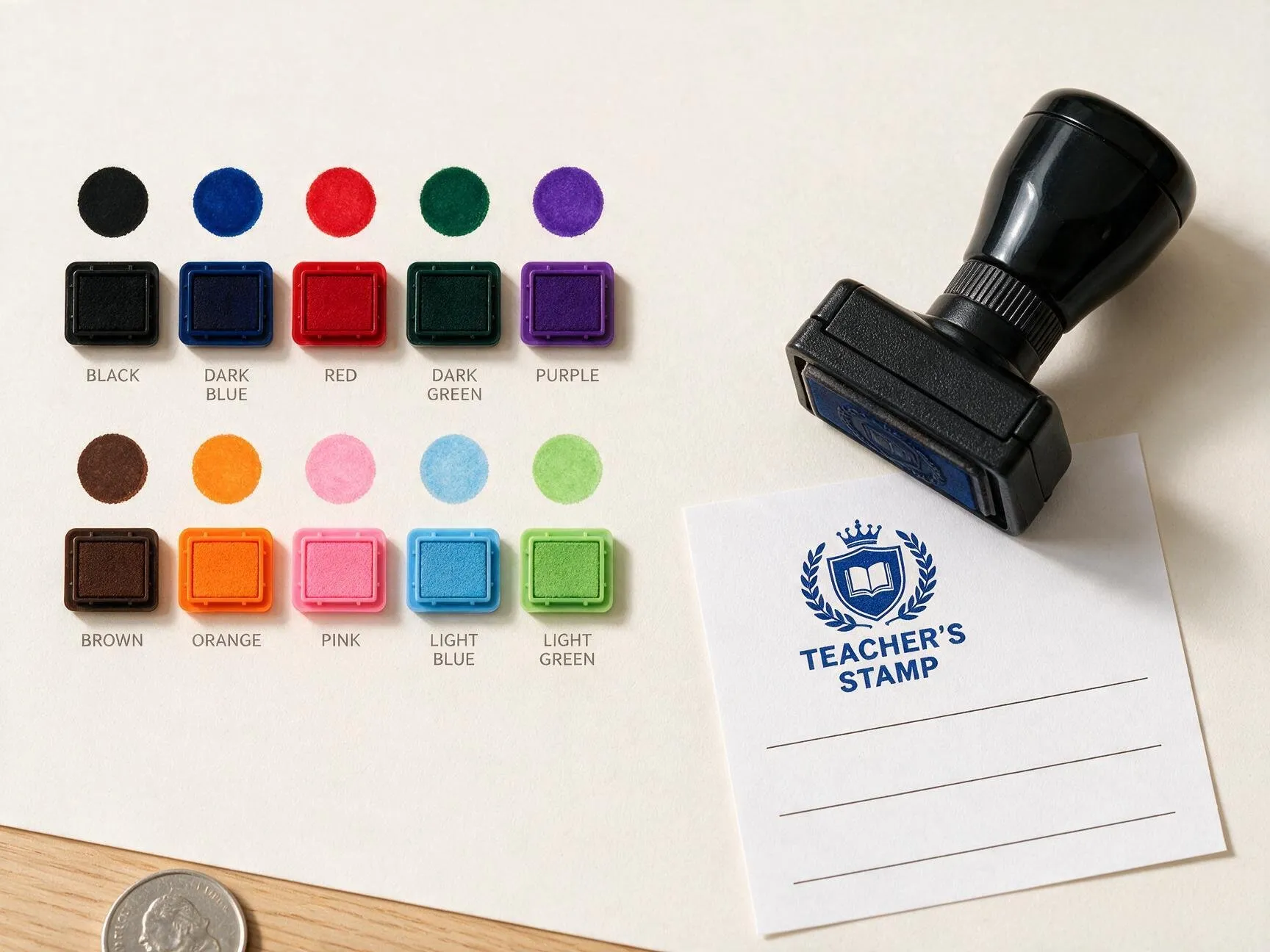
Choosing an ink colour
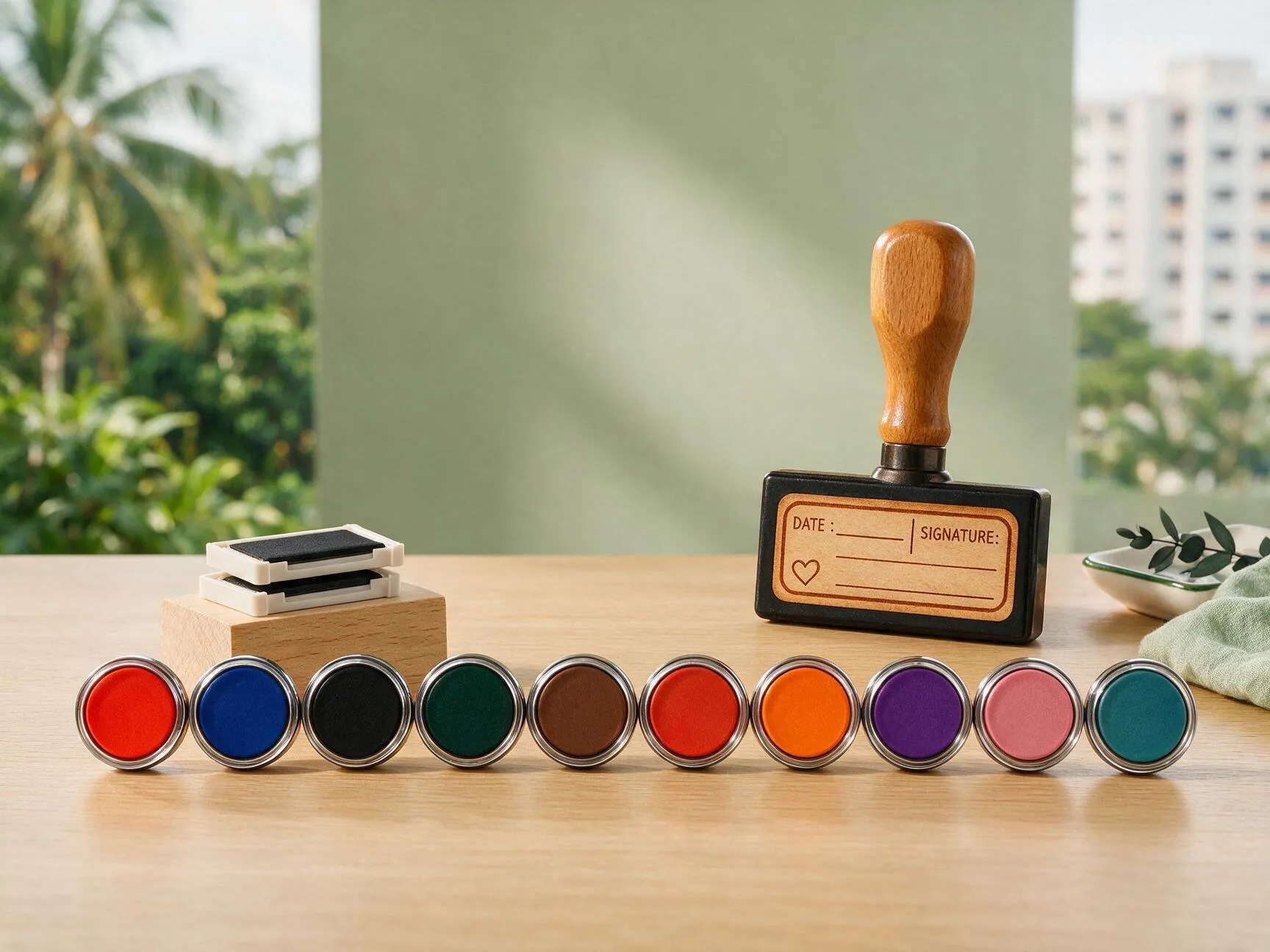
Ten ink colours are commonly available for self-inking stamps: blue, black, red, green, pink, sky blue, brown, orange, yellow and purple.
Colour is worth a moment's thought rather than defaulting to red. Many schools now use red for corrections only and a second colour for positive feedback, so a green or blue encouragement stamp reads differently from a red one even when the words are identical.
If you are buying several stamps, assigning a colour to each job makes a marked script much easier for a student to scan.
Buying for a department
If you are ordering for more than yourself, a few things change.
Wording should be agreed before ordering rather than after. A department where every teacher has a slightly different Good effort stamp loses the consistency that made stamping worthwhile in the first place.
It is also worth deciding who holds the master list of wordings, so that replacements ordered two years later still match what everyone else is using.
Personalised stamps for teachers are usually ordered as a set rather than singly, which makes that agreement easier to reach at the start than to retrofit later.
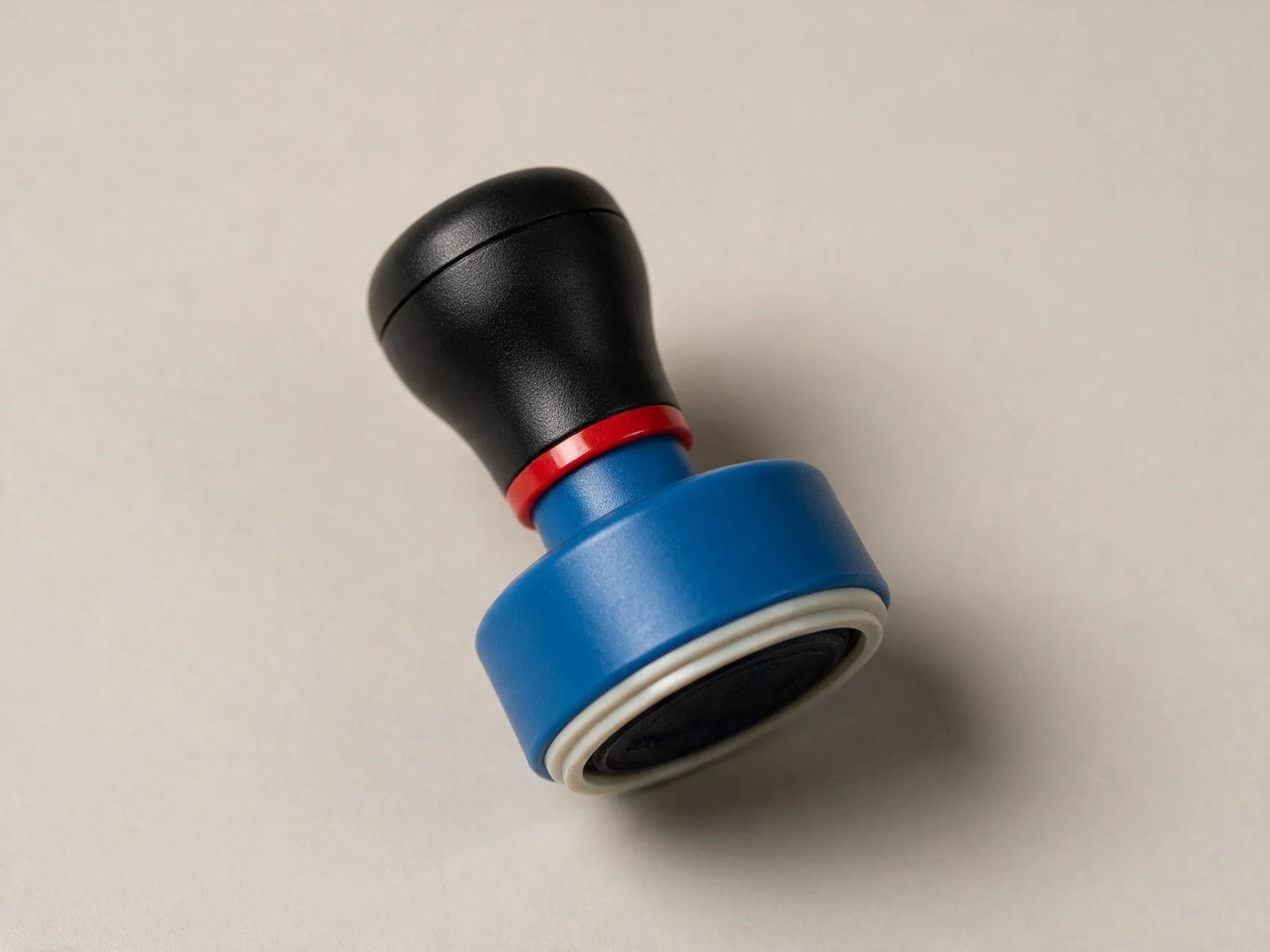
Self-inking is the practical format for classroom use, since there is no separate pad to carry between rooms. You can see the available shapes and sizes on the teacher stamps page.